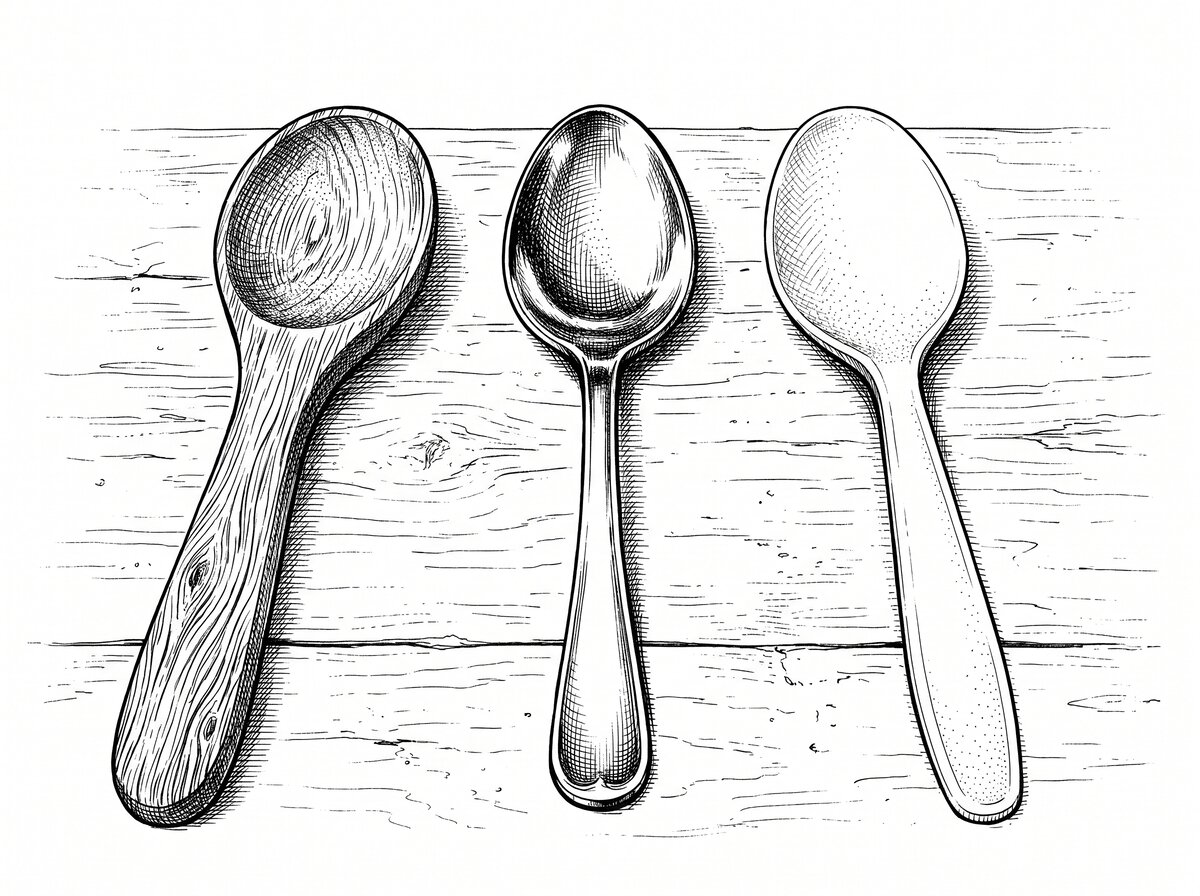
Three Spoons Investigation
Everyone KNOWS which spoon is metal — but how? Passing wood, metal, and plastic spoons around builds the big word: materials are told apart by their properties — feel, weight, sound, hardness.
⬇ This card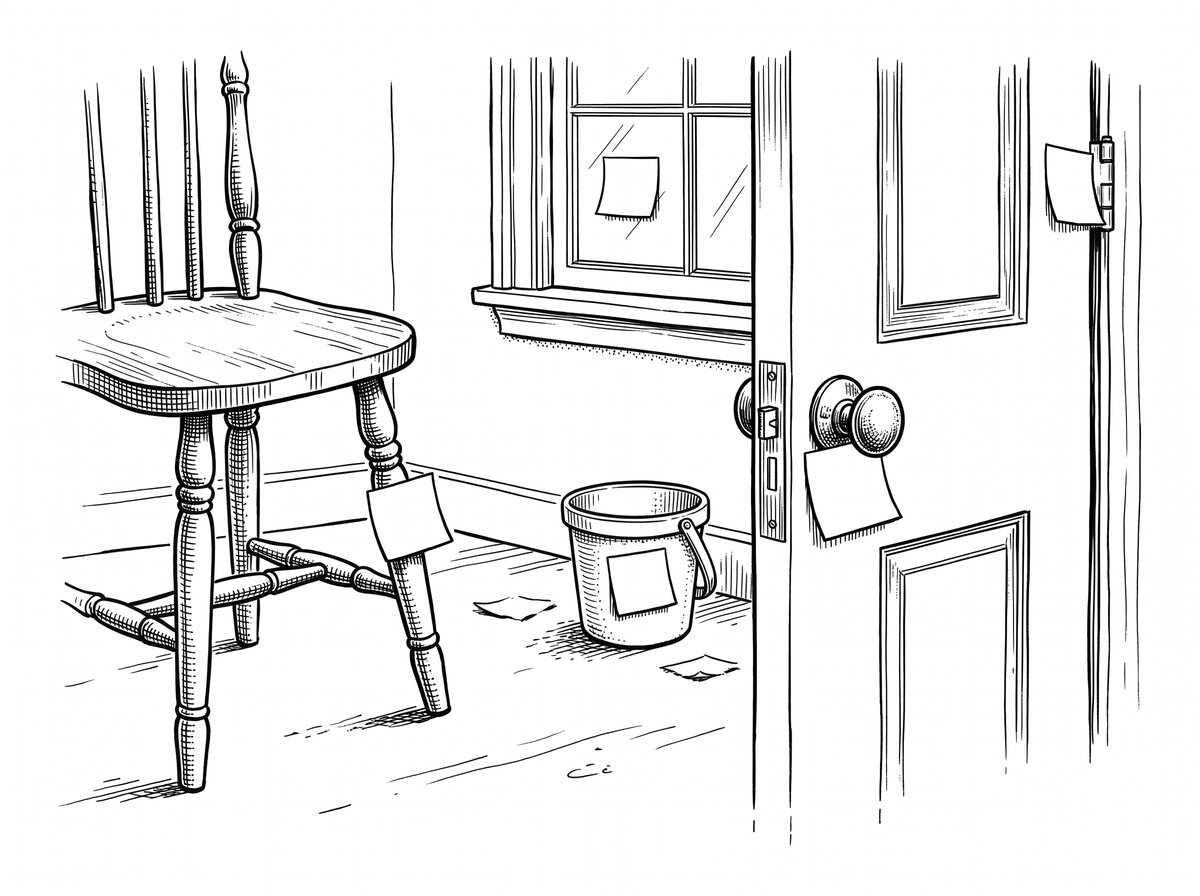
Material Hunt — Sticky-Note Tagging
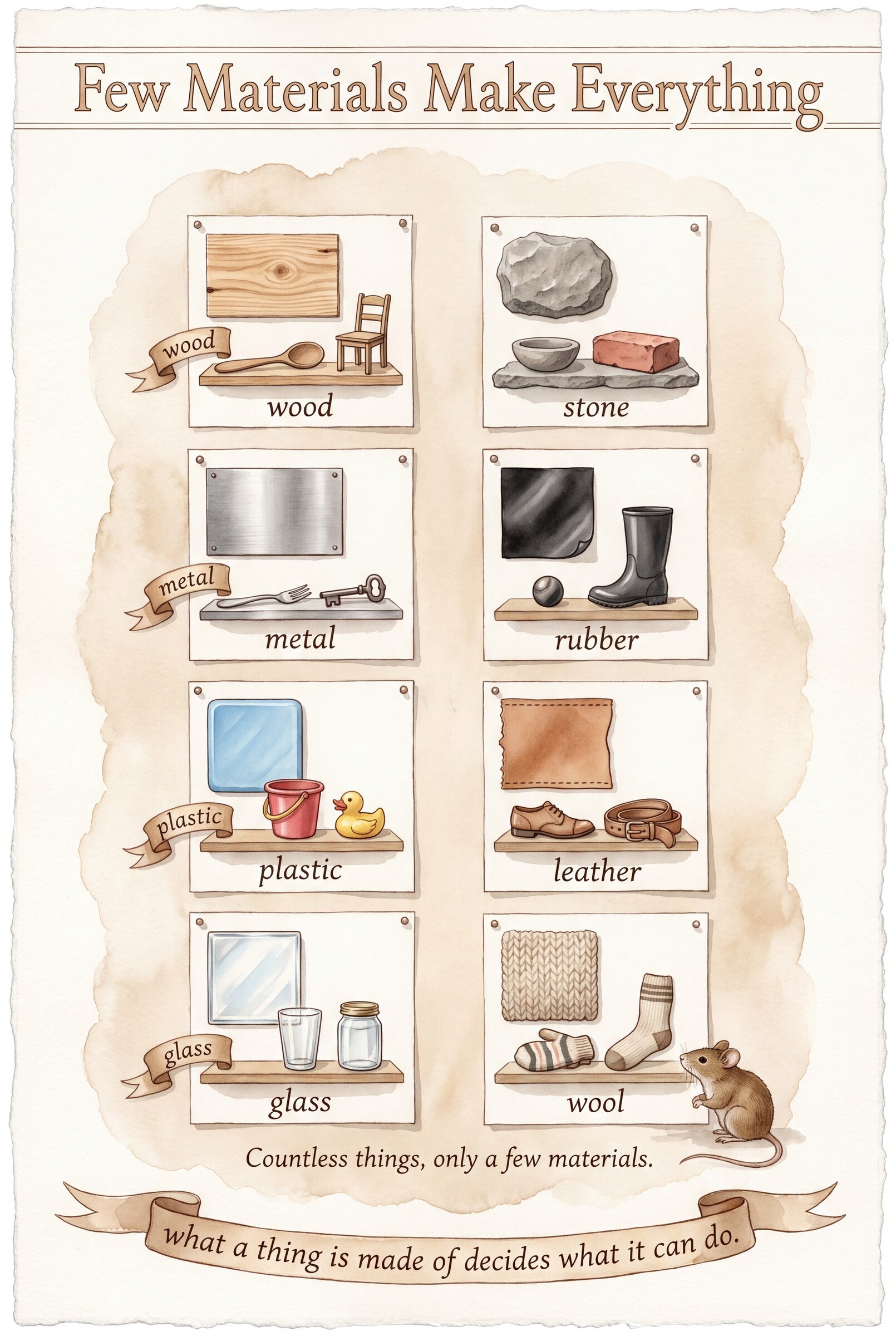
Every child tags the room with colour-coded sticky notes, and a whole room of objects collapses onto four sticky colours: countless objects, only a few materials.
⬇ This card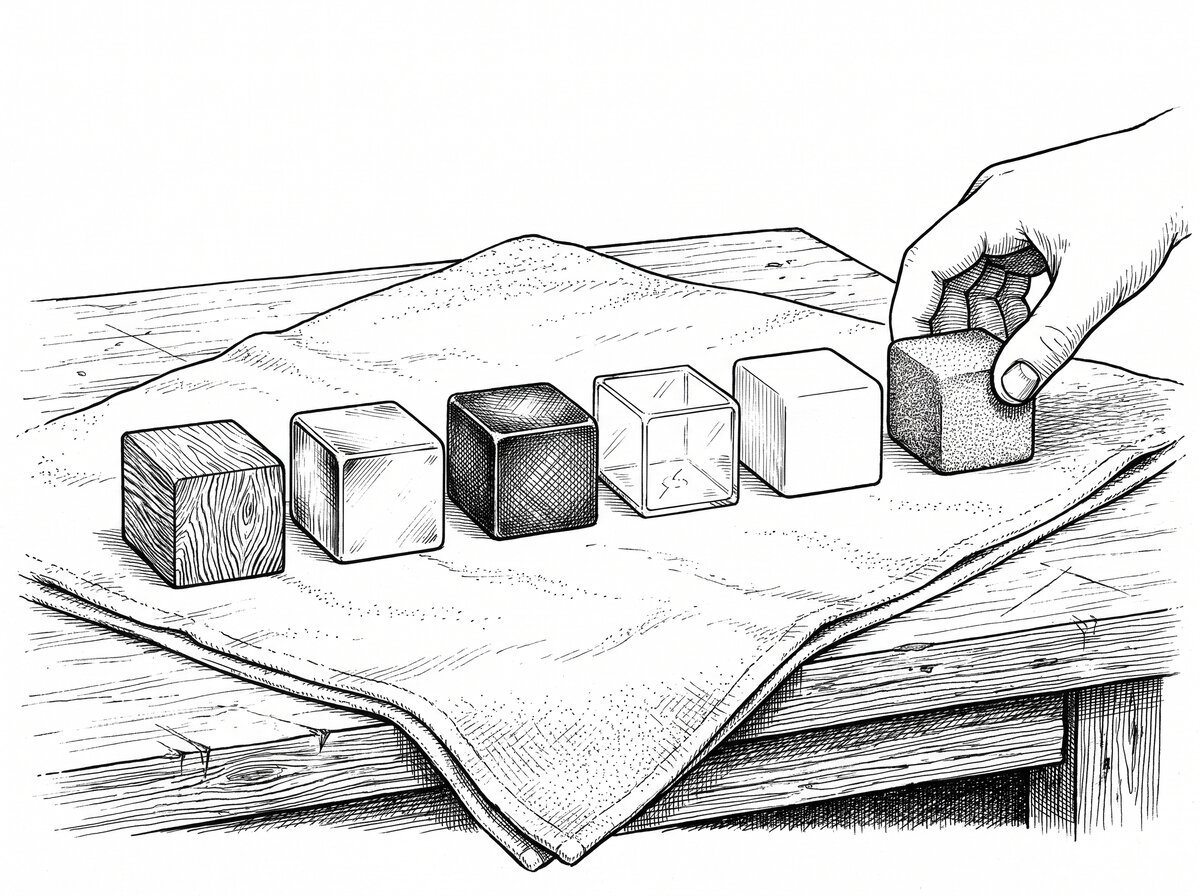
Same-Size Cube Line-Up
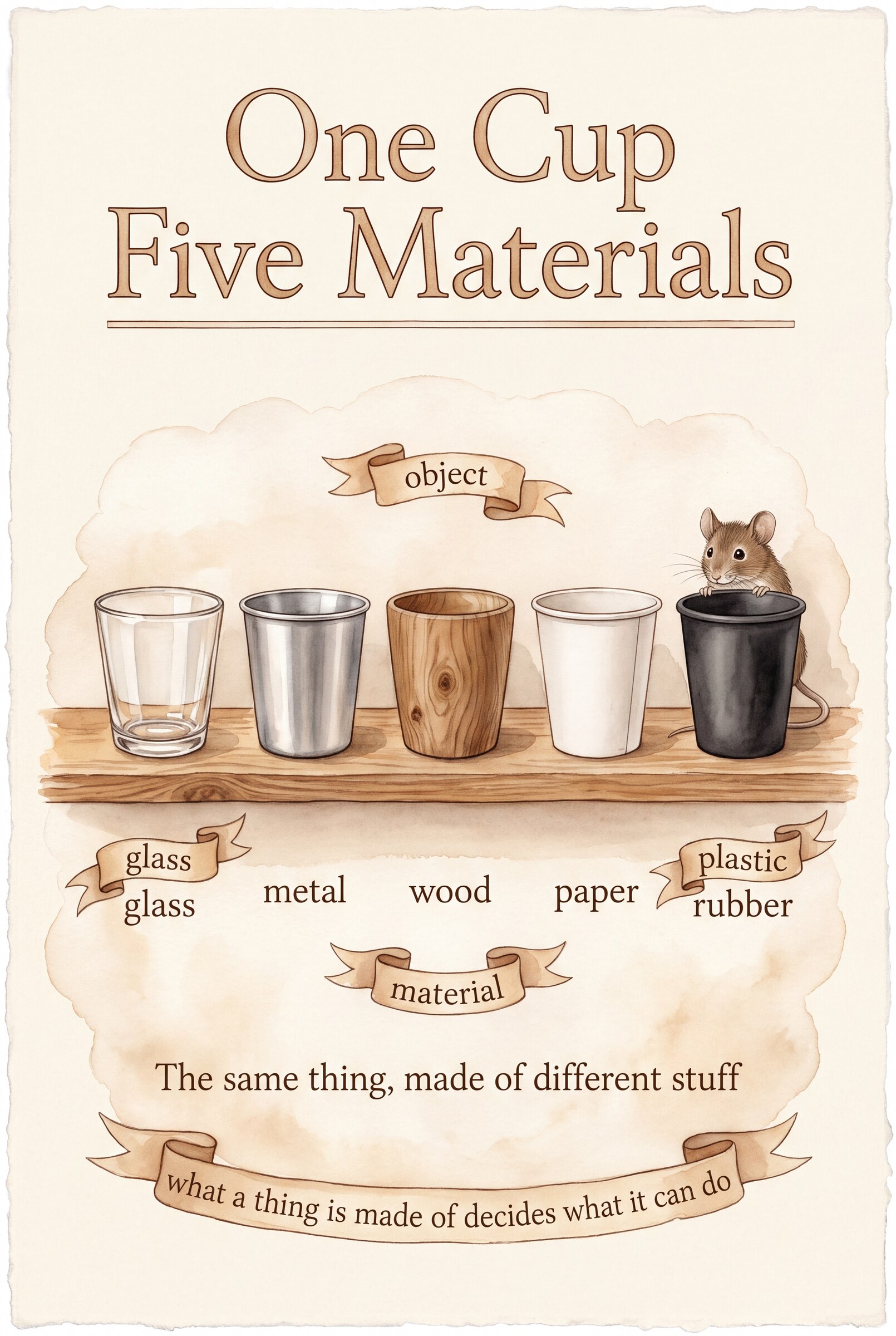
Every cube is exactly the same size and shape — so every difference the kids feel, hear, and weigh must come from the material alone. A fair test, in the palm of a hand.
⬇ This card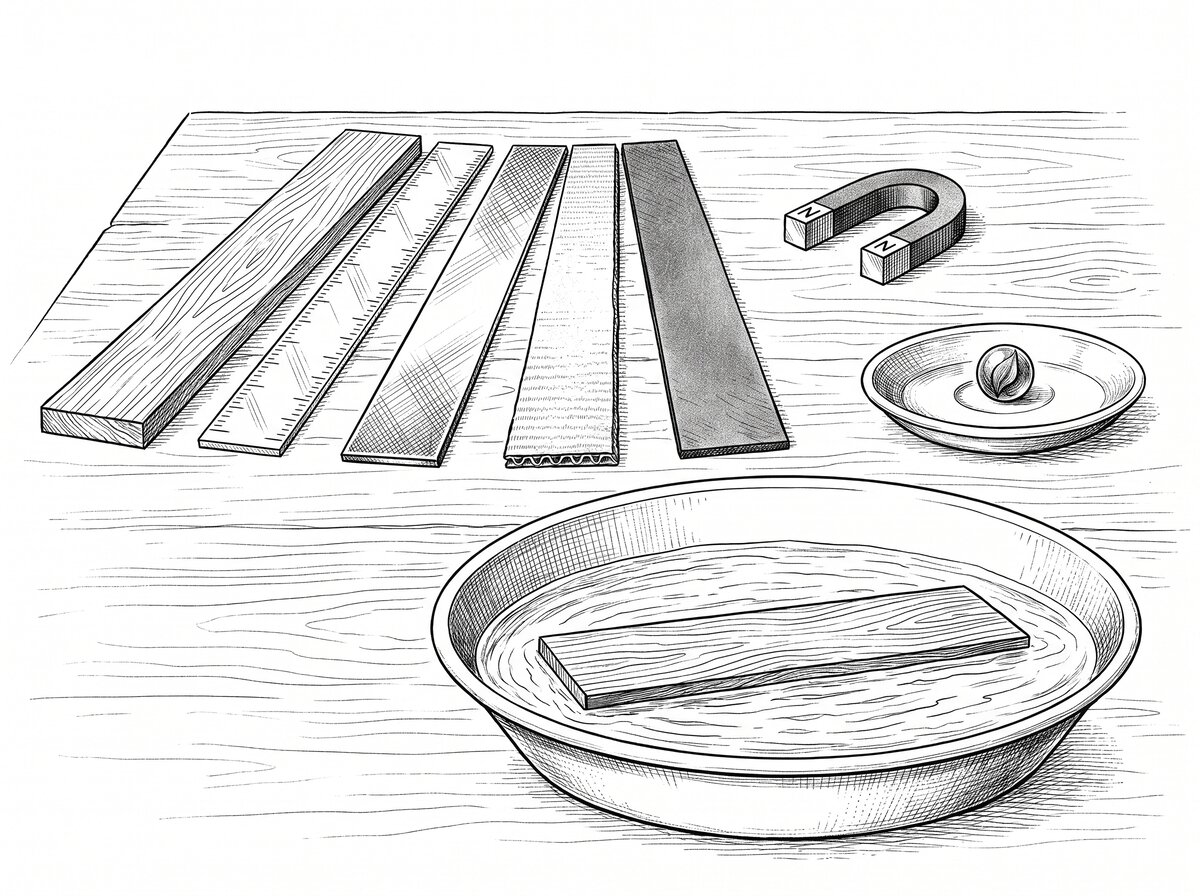
Material Stress Test
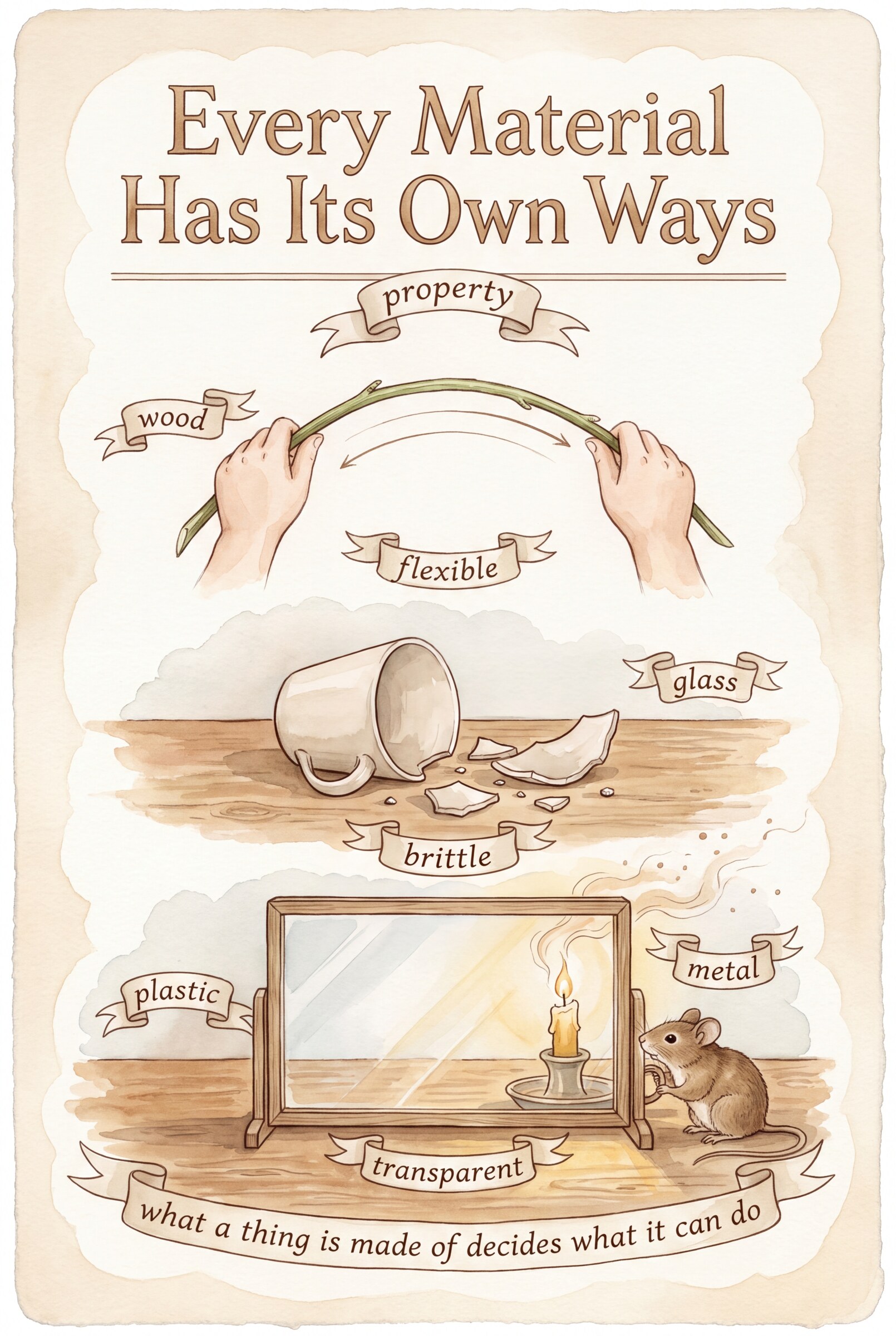
Five identical tests on six matched strips — scratch, bend, water, magnet, light — turn "hard," "flexible," and "brittle" into measured verdicts instead of adjectives.
⬇ This card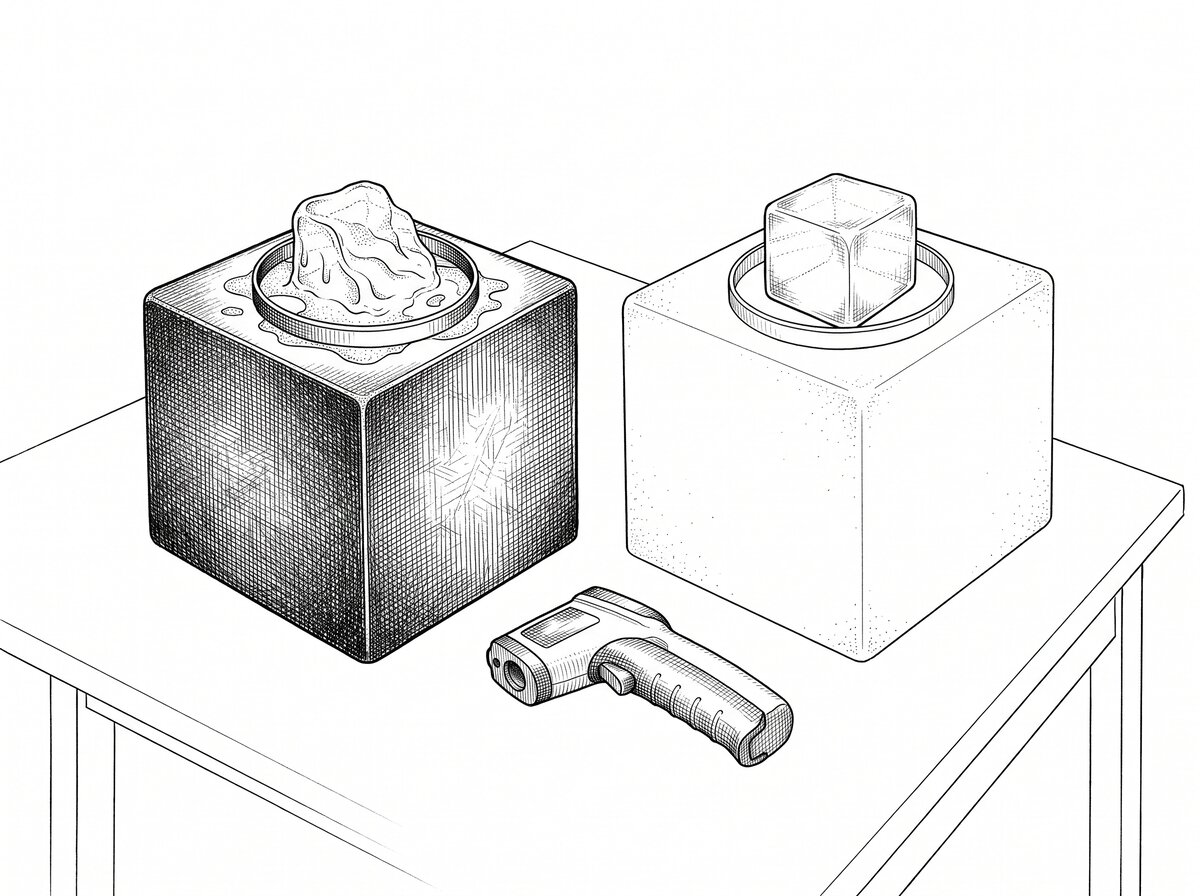
The Cold-Touch Mystery
Nothing is heated, nothing is chilled — and one block still feels icy. The IR thermometer proves both are the same temperature: feels-cold really means carries-heat-away-fast.
⬇ This card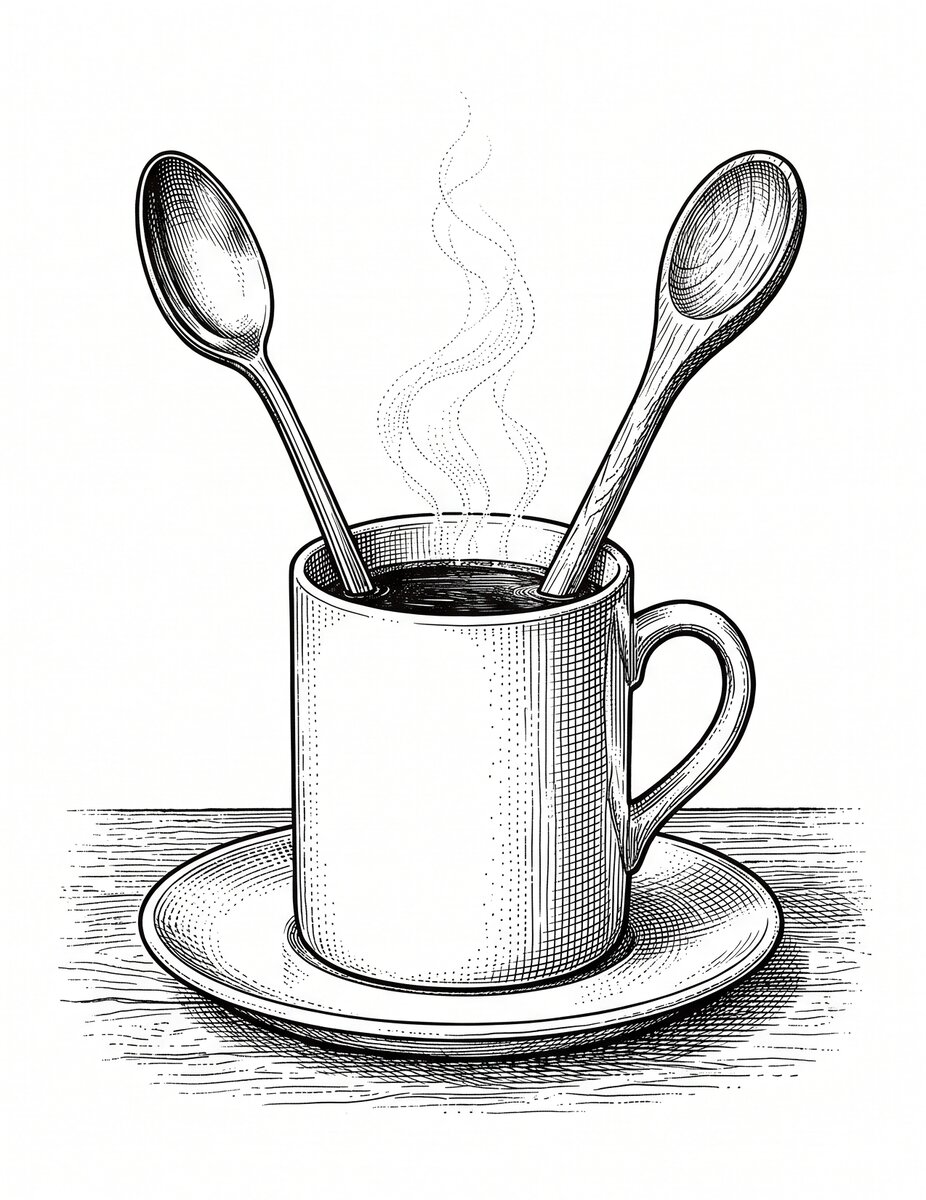
Hot Chocolate Handle Test
Why pot handles are never bare metal: one property — moving heat fast — is perfect for the pan and terrible for the handle. The same property can be a gift or a hazard.
⬇ This card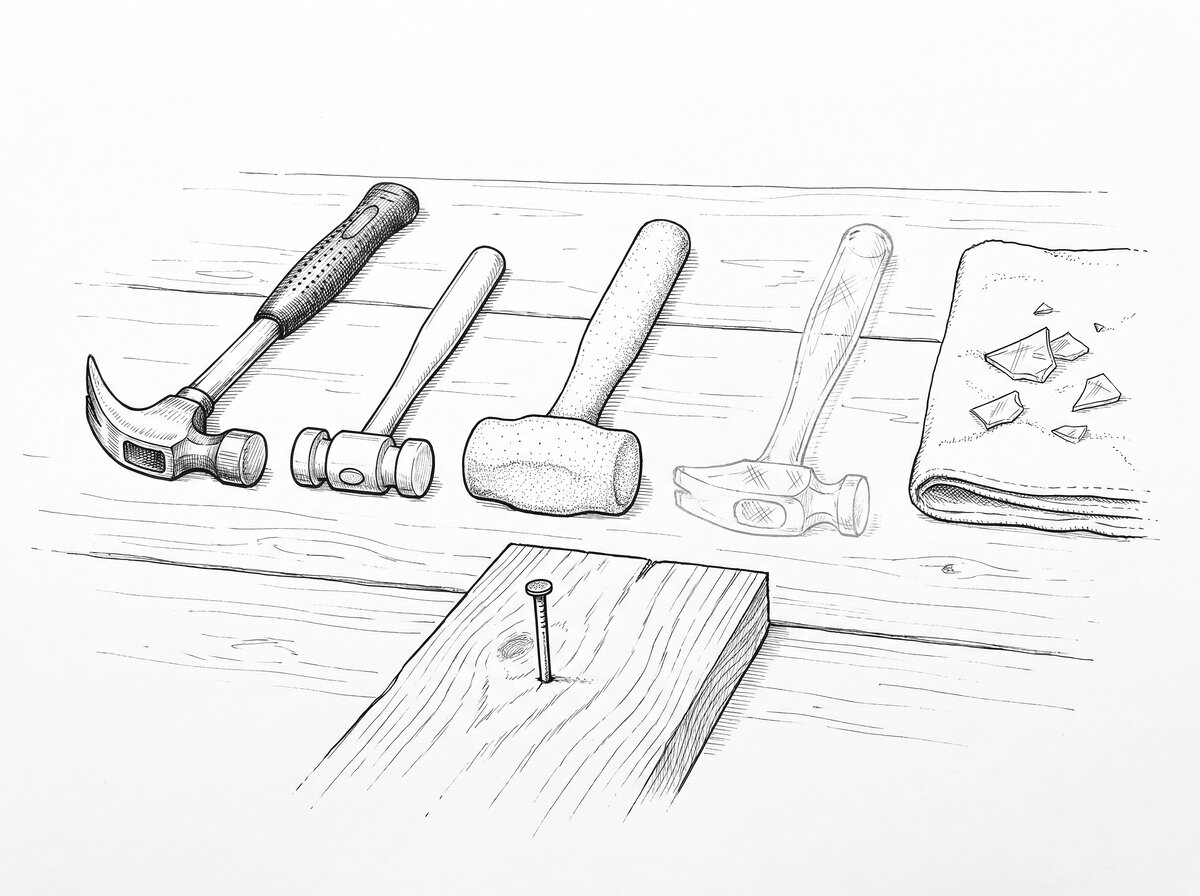
The Wrong Tool for the Job
Same nail, same board, four hammers — the job succeeds or fails purely on the material. Each failed hammer names the missing property better than any success could.
⬇ This card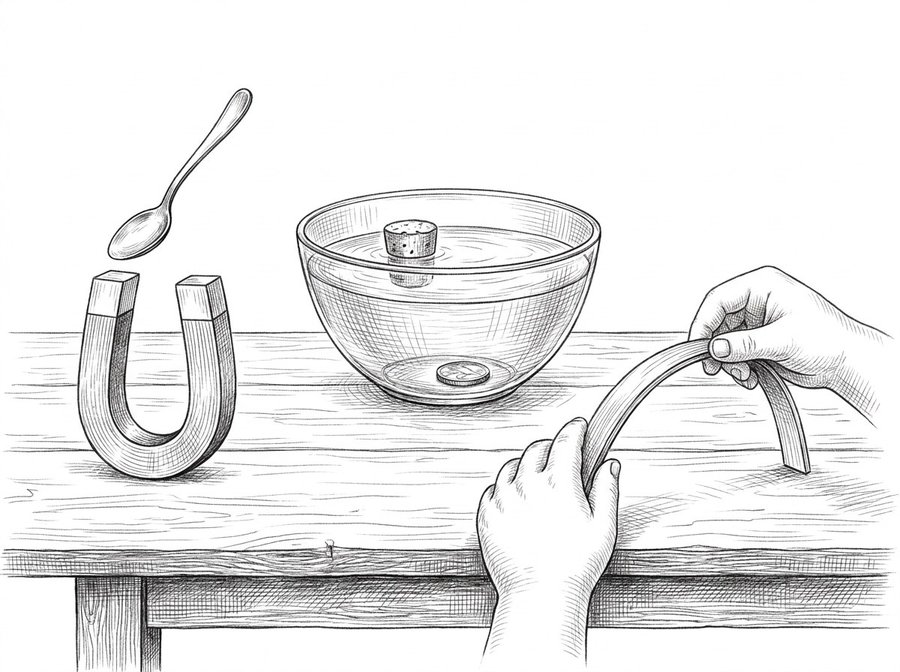
Every Material Has a Test
Hand the kids a mystery material and they can name it — with tests. Does a magnet grab it? Does it float? Does it bend or snap? Scientists identify things by testing, not just looking.
- 3 watercolor posters — Few Materials Make Everything · One Cup Five Materials · Every Material Has Its Own Ways
- 7 experiment cards — from the Three Spoons Investigation to the glass-hammer centrepiece
- Student binder — Overview, Copywork, Worksheet (material-hunt chart + three-spoons test), Song sheet
- Teacher guide, opening oration, and supply list
- Original song — "Made of This" + lyric sheet
- Material Hunt legend — the colour game component that keys sticky-note colours to the four materials
- Every sheet is 8.5×11; the core packet is black-and-white printer-safe